

Civil works refer to the construction, design, and maintenance of large-scale public infrastructure and structures that support communities, like roads, bridges, dams, water systems, and buildings, encompassing everything from earthworks and foundations to creating essential services for public use, distinct from building interiors or furniture. It involves technical planning, heavy machinery, and large teams to build the physical foundations for daily life and economic activity. Civil work (sometimes referred to as civil works) is a category of construction activity that involves planning, designing, building, and maintaining physical infrastructure and earth-related structures necessary for modern society and economic activity. It is a core component of civil engineering and infrastructure development.
A floor plan is a scaled, top-down diagram of a building or space showing the arrangement of rooms, walls, doors, windows, and fixed features like stairs, fixtures, and sometimes furniture. Drawn to scale to represent real-life dimensions, it provides a bird's-eye view, helping visualize layouts, plan furniture, understand traffic flow, and plan construction or renovations. A floor plan is a two-dimensional (2D) architectural drawing that shows the layout of a building, room, or space from a top-down (bird’s-eye) view. It is a fundamental representation used in architecture, construction, interior design, and real estate to communicate how spaces are organized and how people will move through them.
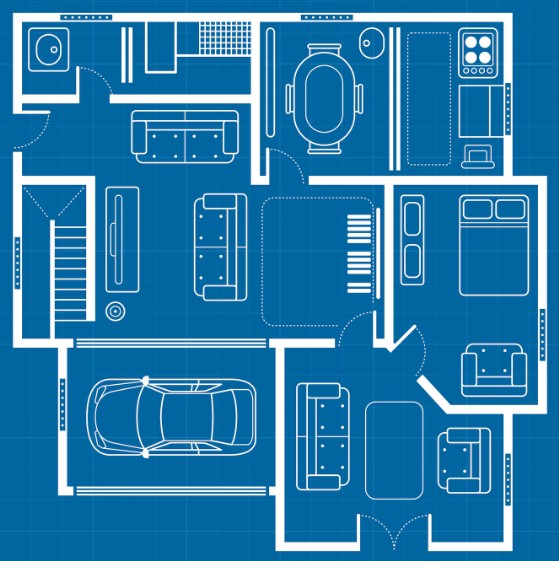
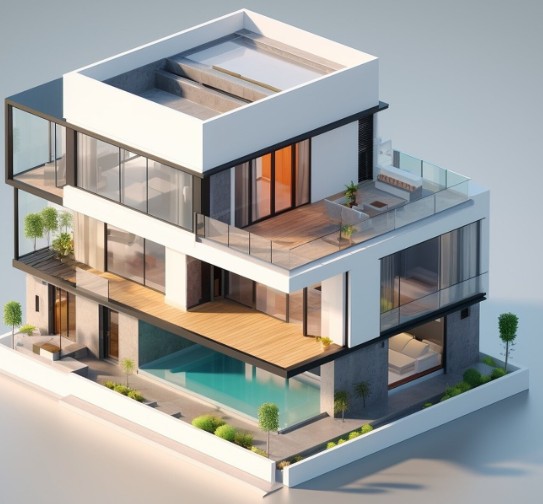
A 3D Plan, or 3D Floor Plan, is a realistic, three-dimensional digital model of a property that shows its layout, dimensions, and finishes, adding depth, height, and perspective beyond traditional flat 2D blueprints, making it easier for clients to visualize the space with furniture, textures, and colors before construction, acting as a virtual walkthrough. A 3D plan in the context of architecture and building design is a three-dimensional visual representation of a space or structure that goes beyond the flat, technical layout of a traditional 2D plan. It shows the layout in three dimensions (height, width, and depth) so that viewers can see how spaces and elements relate to each other realistically before construction begins.